> spirituality
Context
This work is authored in 2026 and is the first part of a larger plan: tracking my belief framework over time. I am writing this prior to doing dedicated research on spirituality or philosophy. My current exposure to those concepts is from growing up in a (casual)Catholic environment, reading non-fiction books that sometimes delve into those subjects, and writing a thesis paper on eastern religions in college (now 10+ years ago). By writing my belief framework down now, I will have a solid record of my current beliefs and reasonings. After doing dedicated research on the subjects (and also naturally experiencing the passage of time and growing older), I will write another work on my beliefs, but without referencing this one first. Then, once the two are complete, I will clearly be able to see how my belief framework has changed with the intentional introduction of new ideas and concepts.
Summary
Human thinking has two sides: the animal mind, which can only understand what it has experienced, and the human mind, which can conceptualize abstract concepts and use reasoning to form conclusions beyond personal experience. When people consider spiritual concepts, they are using their human mind to do so, while their animal mind may still retain uncertainty or fear about what exists beyond personal experience.
We continue on the basis that, rather than it being entirely imagined, the human mind is able to perceive Something that exists around us that could be considered a spiritual reality. Spiritual conceptualizations vary between each individual because of our biology; the physical makeup of our brains and bodies affects how we percieve spirituality. The neuron pathways that form during our upbringing naturally biases us towards conceptualizations we were raised in or regularly exposed to, but each individual person experiences spiritual sensory input differently. Rituals like meditation and substance injestion like psychedelics allow us to see different ways of perceiving spiritual reality, but we are still limited in what we can personally experience.
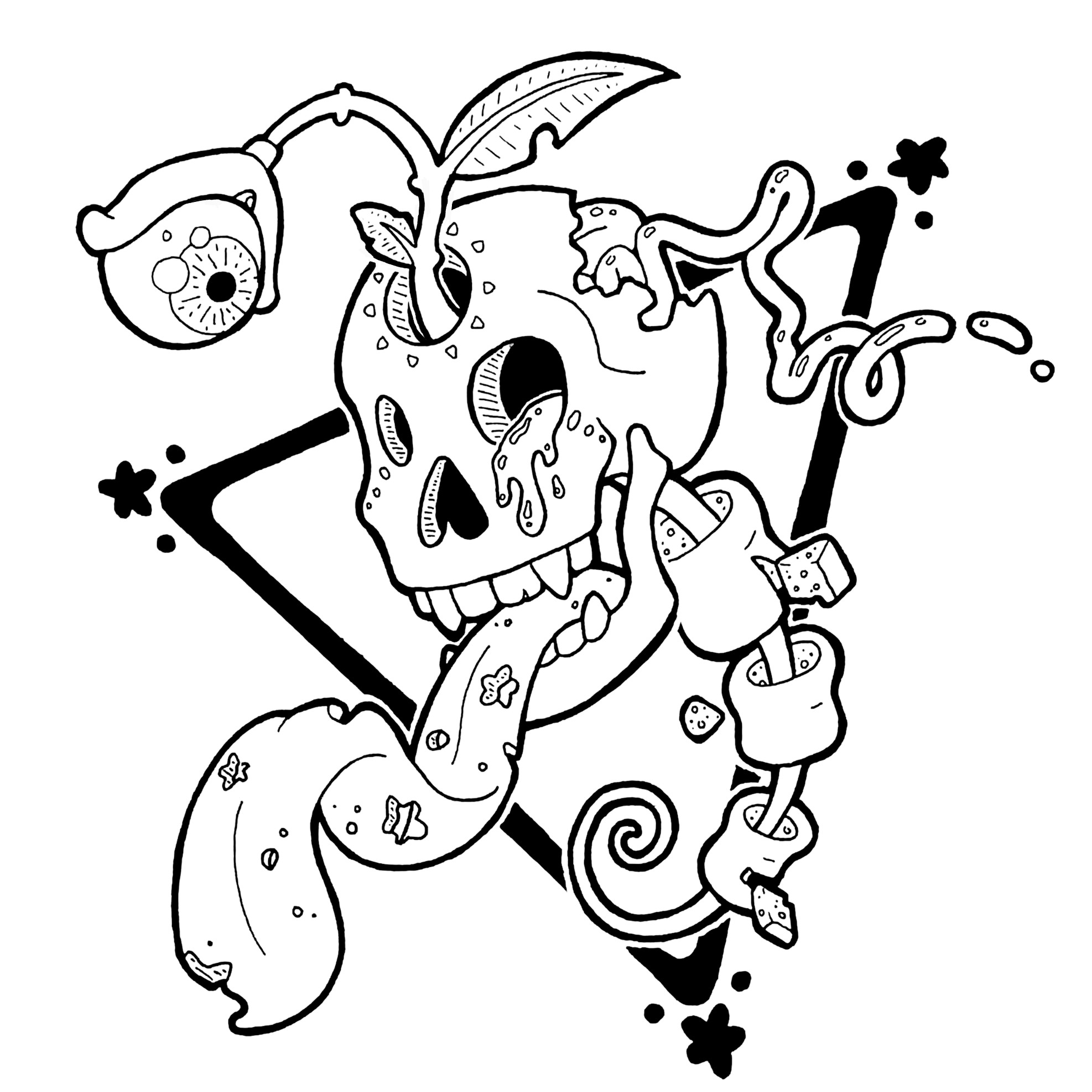
We continue to explaining the author's personal framework. In this framework, there are two sides of reality to consider: Physical Reality (what Is), which is where we, and all things that exist, are; and Energetic Reality (what Can Be), a realm holding the potential for all things. These potential-things are Energy, and the goal of Energy is to cross over to Physical Reality and become actual-things, which is to say, to exist. Humans and Energy have a special relationship, as our ability to imagine and reason means we can create, which means that there are many more possibilities for what Can Be. These human-specialized Energies in the Energetic Realm want to take the form of human-made things like art and technology, and us humans perceive these Energies in the form of Inspiration. Because each human and their perceptions are different due to experience and biology, the actualized form of the Energy will have different characteristics based on its maker. Our self-perception is the result of our brains telling a story to make sense of a chaotic world, and this story is itself a form of Inspired Energy. The way this Energy wants to exist is in the form of the Story of You, which is to say by being you. The purpose of our life is to exist, as we are Energy experiencing actualization in the physical world. Physical limitations and differences prevent the Energy that is You from manifesting in its ideal form, but we can experience that difference and change our behaviors or circumstances to become closer to that ideal. It is not a moral obligation to do so, as Energy not being actualized in an ideal form is just a fact of Physical Reality. However, working on yourself to get closer to the ideal form of You is personally rewarding, as you get to experience an Energy actualizing closer to its ideal state from a first-person point of view. In art, this Energy is represented with creatures called Engi, portrayed as long animalistic beings with many repeating body parts and features.
---------------------------------------------------------------------------------------------
Introduction
To give context to everything below, I am of two minds about spirituality, and I mean that more literally than most. I firstly believe in only what I can see, a science-motivated athiesm that explains spiritual experiences as physical sensations and dying dreams as being flooded with chemicals in the brain. I also, however, believe in a Something, the thought of energies beyond what we as humans can perceive that affects our experiences in unprovable ways. These two beliefs, despite seeming contradictory, are held by the two halves of the mind: the animal mind and the human mind, a mind of instinct and a mind of consciousness.
The Animal, the Human, and the Human Animal
The animal mind is one of base instinct and actual realities. A rabbit, for example, is focused only on its immediate needs: is it safe, is it fed, is it alive. It does not lie in its den pondering a higher power, or worrying about life after death. To an animal, the only things that can exist are things it has experienced; it cannot conceive of an afterlife because it’s never experienced one. In this regard, animals are atheist by default, “believing” in no higher powers or post-death events simply because they do not have the awareness to imagine or consider these concepts, both in brainpower and lived experience.
The human mind has a far wider net of awareness; we are able to float between the past and future, to consider multiple possibilities, to think through concepts that are not immediately clear to us. Put another way, we are not limited in our understanding of the world to only what we've personally experienced, but can also reason, imagine, and rationalize with the information we do have to form new ideas about our experiences and the world around us. This wider thinking lets us wonder about concepts that would not occur to an animal, such as the nature of life and the possibilities beyond death. This allows humans to be spiritual or religious: we are able both to consider concepts that we have not, or cannot, experience in life, and to assign an abstract meaning to experiences that defied other explanation.
Despite having a wider awareness, however, humans are still animals, and have the instincts of the animal mind within our human mind. As an example, someone may both fully believe in an afterlife and still be terrified of death; the human mind believes it will be okay, but the animal mind still carries that fear, since it has not personally experienced being okay after death. Even with all of our added awareness and reasoning, we are often most swayed by the realities we perceive rather than what has been reasoned or conceptualized.
These concepts together form the “human animal” experience. An animal only believes the story it knows, an existence of only this world and this life and nothing beyond it. A human can believe in something more, a spiritual or religious framework that assigns greater meaning beyond what can be personally experienced or understood. The human animal, which we all are, can believe in these seemingly contradictory concepts simultaneously, following a spiritual framework while still fearing what may lay beyond the world of lived experience.
This writing could end here, with spirituality just being a story that humans tell themselves to soothe their animal mind. This is, however, both unprovable and profoundly uninteresting. As a human animal myself, I both believe in the Nothing that my animal mind knows and the Something that my human mind ponders. This work will continue on the assumption that there is a Something that is being perceived by the human mind, consciously or not. What is this Something, and why are there so many differing explanations for this Something across time and culture?
Spirituality and Biology
For anyone who’s even remotely looked into religion and spirituality, it becomes clear rather quickly that there are a lot of different ideas out there trying to explain the workings of our reality and what lies beyond. How can we explain the major differences of opinion? Some people take the path of Correctness, believing that their answer is the Right One and everyone else is mistaken. Others take a different option and believe that everyone is Right (to a degree) and the different frameworks can exist simultaneously. Still others think that the idea of being Right at all is preposterous, as there is no way to know what the truth may be and thinking your view must be correct is egotistical to the highest degree.
This work has no interest in telling anyone they are Fully Right or Fully Wrong. That would be, as the final example above called it, quite egotistical. However, there is a way to explain why so many people claim to experience spiritual or religious events, despite the frameworks they’re explained with appearing contradictory.
The answer lies in our biology. Just as the physical makeup of our eyes affect how we experience the sense of vision, the physical makeup of our brain and neurons affect how we experience the non-physical realm. Each person experiences a different view of spirituality because we each have different minds on a physical level. You may be conditioned to be more biased towards one spiritual framework or another due to your upbringing or surroundings, since your neural pathways will form influenced by these factors. Alternatively, you may experience or relate to a framework far different than those of your peers, because your perception of the same spiritual reality is so different. This is why it is so important to deeply consider the religious values you may have been raised with or exposed to early on; you have no way of knowing if the framework you’ve been given is one that is compatible with how you experience spirituality until you check for yourself.
Overall, it is as meaningless to claim a specific religious framework is Right for everyone as it is meaningless to say your perception of the color red is the only Right one. Your perception of red is just that, your perception. You have no way of knowing whether someone else’s red is your green. In the same vein, you have no way of knowing if someone else’s God is your Fate, or if a spiritual event that someone else is experiencing is as imperceptible to you as the color red is to a blind person. Without the ability to mind-meld and experience the world directly from the perspective of someone else, our biological differences will forever prevent us from truly knowing the differences in how we each perceive spiritual reality.
We can, however, experience some different ways of perceiving the same spiritual realm. Our sense of the spiritual reality is just as much a perception as our sense of sight or smell, and as such, it can be affected just as these other senses can. By putting our minds in an altered state compared to our baseline state, we can experience a change in how we perceive spiritual reality. There are many examples of this intentional altering of the mind through history: we can reach an altered state of mind with ritual like dance, prayer, and meditation; and can also use substances, most notably psychedelics, to alter perception in both spiritual ceremones and personal contexts. During these altered states, we perceive spiritual reality in a different way than we do in our baseline state, and these changes in perception give us greater understanding of spiritual reality and ourselves.
This work could, once again, end here, on the note that finding an answer is truly an impossible task. However, as has been spoiled by the page count, we are not done yet. This work is being authored by a person, a person with a biased mind that has a biased perception of how to explain that which we cannot clearly see. The rest of this writing will dive into my personal framework, not to convince you of its Rightness, but to show you how different and personal the spiritual experience can be.
Physical Reality and Energetic Reality
There are two sides to Everything. The first side is the one we are most familiar with: the Physical Reality, the space that makes up our universe, our planet, and our bodies. This is the space everything that exists, or “Is.” The second is more abstract; rather than being made up of things that exist, it instead holds the potentials for things to exist, or put another way, it is filled with what “Can Be.” We will call this side the Energetic Reality.
While Physical Reality is made up of actual-things, Energetic Reality is made up of potential-things, or Energy. The actual-thing that each strand of Energy desires to be is different: it may take the form of physical items like rocks or dogs, or it may take more abstract forms like songs or mathematics. Regardless of the form it takes, the goal of all Energy, or potential-things, in Energetic Reality is to cross over and become actualized in Physical Reality as actual-things. In other words, the goal of all Energy is to exist, and the world we experience is made up of Energy succeeding at this goal. Every plant, rock, song, and person was once a strand of Energy waiting to exist, and when it ceases to exist as whatever form it’s taken, it will return to Energetic Reality, with the goal of coming back to Physical Reality to exist again as something else. This cycle of Energy moving between a state of Can Be to a state that Is and back again is the cause of the constant state of change we experience in our world and lives.
This concept is understandable for basic physical things, like bears or the Sun, but as mentioned before, Energy can desire to exist as more abstract concepts: as art, or technology, or communal systems. Everything that we perceive as something that Is, even if it does not have a physical form, is an Energy becoming actualized. If it is knowable outside of your own mind, it is an Energy that has been given form.
What about the things inside of your mind? Does a thought count as something existing? The short answer is no. In order for something to exist in Physical Reality, it has to be perceivable not just to you, but to others as well, and thoughts don’t fulfill that condition. However, thoughts can, and often do, lead people to action, which brings ideas into perceivable reality. When we are inspired, we create: we create the physical in houses and technology, the artistic in poetry and cinema, the societal in laws and systems. When we create, we bring Energy from the realm of Can Be to the realm of Is, here with us.
The Human Element
A common question in spirituality is why, of all the creatures of the world, humans are singled out as being particularly important or noteworthy. We could answer that question by saying that we, as humans, would of course selfishly put ourselves above other beings, as we are “more” than “just animals.” But what, exactly, makes us different? Is there something specific that makes our spiritual experience differ from other living things?
If you ask someone what the difference between humans and other animals is, you will often get an answer about sapience: humans are aware of our status as individuals and understand our place in the world, and other animals, as far as we can tell, aren’t. We believe this is a differentiating factor so strongly that we even named our species after it: homo sapiens, the wise ape. This higher level of conscious experience allows humans to consider not just their immediate surroundings and needs, but also abstract concepts like their sense of self or plans for the future. Put another way, all animals can perceive what Is, but only humans understand what Can Be. This ability to understand what Can Be gives humans unique insight into the Energetic Reality. Energy is, after all, the embodiment of what Can Be. Because of our elevated awareness, we can not only understand the difference between things that Can Be and things that Are, but we can also bring things into existence through our own actions.
When humans evolved to become sapient, Energy evolved with us. Before this awareness, the options for what Could Be were limited to the physical world and the actions of animals. The human mind’s awareness of abstract concepts and ability to act on this awareness drastically increased the options for what Can Be, creating a vast array of new options for Energy to take the form of. The Energy waiting to be a play like Les Mis did not exist in the animalistic past since an animal could never create such a work, but since a human can create art and stories, that Energy formed and waited to be actualized by a mind that understood it.
The human understanding of what Can Be, or Energy, is what separates us from other animals. But what about Energy’s relationship with humans? How does an Energy with a desire to be a human-created concept transition itself into our world?
Energy and Inspiration
The relationship between Energy and humans is unique thanks to the human ability to create. Creation, however, does not happen from nothing. In order to make something, the human mind first needs to have a rough idea of the thing it is creating. This can come in pieces, slowly working out the details from a rough concept, or it can come fully-formed in a frenzy of thoughts. Either way, before a human-made idea can become reality, it needs to be thought of first. Put another way, to change something that Can Be into something that Is, a human needs to first be inspired.
Inspiration comes from the human mind’s awareness of the Energetic Reality and what Can Be. Because we humans can perceive Energy before it exists in our reality, we will sometimes encounter an Energy before it has been actualized. This Energy latches onto our awareness, filling our thoughts with the shape that it craves to be actualized in. Some are quiet, like the idea for a drawing that fades before you can reach a page, and others take over our minds with obsession as the Energy begs to join us in existence, like a story that keeps building in your mind even when you’re not actively trying to think about it. Both of these are examples of Inspiration, and it is the way that our minds perceive unactualized Energy.
If a human chooses to follow this Inspiration, they will act in a way that brings the Energy from Can Be to Is: they will write the story, or paint the mural, or work out the technology that the Energy wishes to be in the form of. If the human does not follow the Inspiration, however, all is not lost for the Energy. Just as two people can discover the same flower in a field, two people can also encounter the same Energy, experiencing the same Inspiration. The actualization from this Inspiration will be different between the two people due to differences in our mental perception, but the end result will still bring the Energy into existence, succeeding at its goal. This is why you may sometimes see a movie, book, or other project and have the experience of thinking “hey, I thought of that first!” You perceived the Energy in the form of Inspiration, but since you did not act on actualizing that Energy, it used a different vessel to bring it into existence. After all, the end goal for Energy is to exist, regardless of which human acts upon the Inspiration caused by perceiving it.
The Energy of You
Just like all other things, we humans are Energy made manifest. The “You” that you perceive when looking into yourself is an Energy that has crossed from what Can Be to what Is. In that regard, you have already succeeded in the goal of existence, seeing as you exist. (Congratulations, you’ve done it!) You may also notice, however, that there is a version of you in your mind that you desire to be, an idealized form of your self and life that you wish to embody and experience. Why is this? If you’re an Energy that has succeeded at existing just by being here, why is there a discrepancy in the You that you are and the You that you wish to be?
The first piece of the answer lies in the limitations of our physical reality, more specifically in our biology. When an Energy is in the realm of Can Be, it is unconstrained by physical laws and can hold an idealized perfection. When it crosses over to Be as a human or other living things, however, all the competing forces of existence are able to act upon it. The physical makeup of your body, and especially the neuron pathways in your brain, change both your perception and expression of Energy, including the Energy that crossed over to become You in the first place. Throughout your life, you may become de-synchronized to your source Energy, leading to a feeling of “not being yourself” until you correct the discrepancy. This may Inspire you to be kinder, or bolder, or make other changes to your actions that better align with what you feel in the core You.
The second piece is another element of Energy that we have not touched upon yet, which arises specifically when it takes the form of life. When Energy has the form of a non-living entity like a stone or an essay, there are two states it can be in: either it exists or it doesn’t. When it takes the form of life, however, this becomes more complex. As an example, the You that you are at two years old is very different than the You that you are as an adult; you are the same person, and yet you are not. This is because Energy that takes the form of life is not only taking the form of a physical construct in your body, but is also taking the form of a story: the story of You.
The Story of You
To explain this concept, we need to take a step out of spirituality and ask a philosophical question: what are You? Or, to phrase it another way: where does your sense of Self, your consciousness, reside? If one does not believe in a Soul, the answer is that it's somewhere in the brain. But where?
The answer to this question is not a physical location; science has not found a specific spot the "self" resides in our brains. On the contrary, what has been found in brain science points not to a specific location, but a combination of different brain areas that work together.
The brain is made up of many small base-level functions, which come together at a higher level to form more complex concepts. Sight, for example, is a number of different smaller functions all working together to build a larger experience: one function is for color, another for size, another for texture, and so on. These pieces and many others come together to give the full picture of what is in your visual field. Like a company organizational chart, the lower functions, like employees, work together and report to their bosses, the higher functions, who themselves have levels above them to report to. Functions do not send all of the information the receive up the chain; like employees providing a report to their management rather than sending raw files and data, they only send what is deemed relevant information to the higher functions. At each step, information is received, processed, and summarized before being brought to the next combination of functions, until all of the highest functions combine with one final result, our brain's CEO.
The human brain, compared to animal ones, is particularly complex. Not only do we have to take in, organize, and process immediate sensory information, but we also consider the past and future, and can make complex decisions based on this information. In order to make these complex decisions, there needs to be a high level function that combines and processes this information, requiring access to our current awareness, our memories, and our potential futures all at once. When you combine the functions that sort through your past, experience your present, and consider your future, the function it creates is the CEO of the mind, also known as You.
So what exactly are You? What does this highest brain function do? Put simply, it's a storyteller; it sorts through all the pieces of your past, present, and future and creates a continuous story that makes sense of all the pieces. The experience of being You is experiencing this story being told in real-time, your brain organizing the overwhelming amount of information in the functions below it, determining what is relevant to the story, and choosing how to proceed through it. The experience of being You and this story being told are inseparable; the Story of You is the experience of being You, the first-person experience of having a Self.
The Energy, You, the Energy You
To return to the spirituality side of the discussion, this human brain process creating the Story of You is an Energy, taking the form of a story being told through the processes of the human brain. The goal of this Energy is to exist in our realm as the Story of You, which is to say, as You. You are an Energy given form in this world, with the unique ability to be aware of your story, of your Self.
For those that care about questions like “what is the meaning of life,” the answer from this concept is simple: it is to exist, it is to exist as You, and it is to exist as You experiencing the Story of You. Your life already has all the meaning it needs, because you’re here, and you’re you, and you’re experiencing life as you, and by doing so, you are succeeding at being Energy made manifest.
This does not mean that You are naturally a perfect being, however. The Energy's expression in the Physical Realm is affected by biological limitations of the body, so it cannot form in the way it is idealized in the Energetic Realm. The Energy that is You has a specific form it wants to manifest as, and You experience this as an ideal self, a person you want to be with a life you want to lead. Just as the form of Inspirations are affected by the creators that actualize them, the expression of You is affected by the limitations of biology and physical reality, creating the discrepancy between the You that you are and the You that you, and your Energy, wish to be.
This inability to fully actualize as the Energy's form in the Energetic Realm is not a failure; it is a morally neutral reality of the relationship between the Energetic and Physical realms. The side of what Can Be is filled with near unlimited possibilities, while the side of what Is is far more restrictive. While Energy have a ideal actualized form in the Energetic Realm, the goal of Energy is to exist in whatever form it is able, based on the Physical Realm's greater limitations. No person truly believes they lived the perfect life or are their perfect Self, but that should not stop you from striving to feel closest to your core Self, the form your Energy takes in the realm of Can Be. Doing so is not a moral success but a personal one, a journey of self-discovery and growth with the reward of experiencing an Energy actualize from what Can Be to what Is from a first-person point of view.
The Personification of Energy
Throughout this work, there have been multiple references to Energy "wanting" things: to exist, to be actualized, to find a way into the Physical Realm. This wording may be misleading, as an Energy does not have a consciousness as we do. It "wants" to be actualized just as a fire "wants" to burn: it is not out of an innate desire, but as a law of how our realities function.
Humans are not the best at leaving forces of reality unpersonified. Throughout our history, we have created characters of the world around us, attributing forces of nature to gods, misfortunes to evil spirits, and giving many more representations of our experiences a personified identity we can try to understand and relate to.
This spiritual framework is no exception to this trend, though the personification is limited to the world of art. In my artistic expression, the Energy around and beyond us is often represented by beings called Engi. Matching the thread-like feeling of Energy, the Engi are long animal-type creatures, each one with a face based on a different animal but sharing the same winding body made up of many colorful links. They often have repeating body parts on their faces or across their links, such as extra eyes, ears, limbs, or animal-specific features like antlers, which are typically connected the "type" of Engi that it is. For example, an Engi representing the Energy for a painting may be portrayed with many eyes (to see art with), or with many arms (to create art with). If the Engi art is a format that allows for motion, they are shown to have fluid forms, with their bodies enlongating or shrinking as they move, or the extra features on their links shifting around or multiplying.
---------------------------------------------------------------------------------------------
Concluding Thoughts
The choice to believe in any form of spirituality is a human gift, one born of our advanced minds and ability to consider concepts outside of our perceptable experience. Many people find themselves relating to frameworks laid out by humans before them, people who experienced the spiritual reality, or lack of its reality, in a similar way to them. Other people may find their experiences are outside of the religious norm, perceiving spiritual reality in a way that is not explained in mainstream spiritual systems. Neither of these are inherently correct or incorrect, but instead represent the vast array of potential perceptions that humans can have for the external world and realities around us. By analyzing our relationships to spiritual concepts and finding which we resonate with, we can discover a framework that explains our perceptions, or, if we do not find a single one that matches our views, we can choose to create our own.
If this work has interested you, I encourage you to write out your own thoughts around the spiritual experience. Writing this out was a great help in understanding my own thinking; when you have to explain something to somebody else, especially something as abstract as spirituality, you're forced to walk through your reasoning slowly and are confronted with every concept that you hadn't fully explored yet, intentionally or not. Once written, a work like this creates a snapshot of your experiences and reasoning, not only for you to reference in the future, but also for others to see and compare to their own experiences, if you choose to share it.
Through this work, I have added my spiritual perspective to the library of human experience. I would love to see you add yours too.